
India’s Wellness Economy Enters a New Growth Phase; Ayurvedic Products Market Set to Reach USD 22.37 Billion by 2030: ASSOCHAM-TechSci Research
Medical tourism market projected to reach USD 16.76 billion by 2030; Dr. M. Srinivas calls for greater R&D, evidence-based validation and integration of AYUSH with modern medicine
India’s health and wellness landscape is undergoing a significant transformation, with growing momentum around preventive healthcare, holistic wellbeing, Ayurveda, digital health and wellness tourism. India’s Ayurvedic products market is projected to grow from USD 8.12 billion in 2024 to USD 22.37 billion by 2030 at an 18.4% CAGR, while the country’s medical tourism market is projected to grow from USD 9.01 billion in 2024 to USD 16.76 billion by 2030 at an 11% CAGR, according to the ASSOCHAM-TechSci Research Knowledge Report “Towards a Healthier India: Building a Culture of Preventive & Holistic Wellness.”
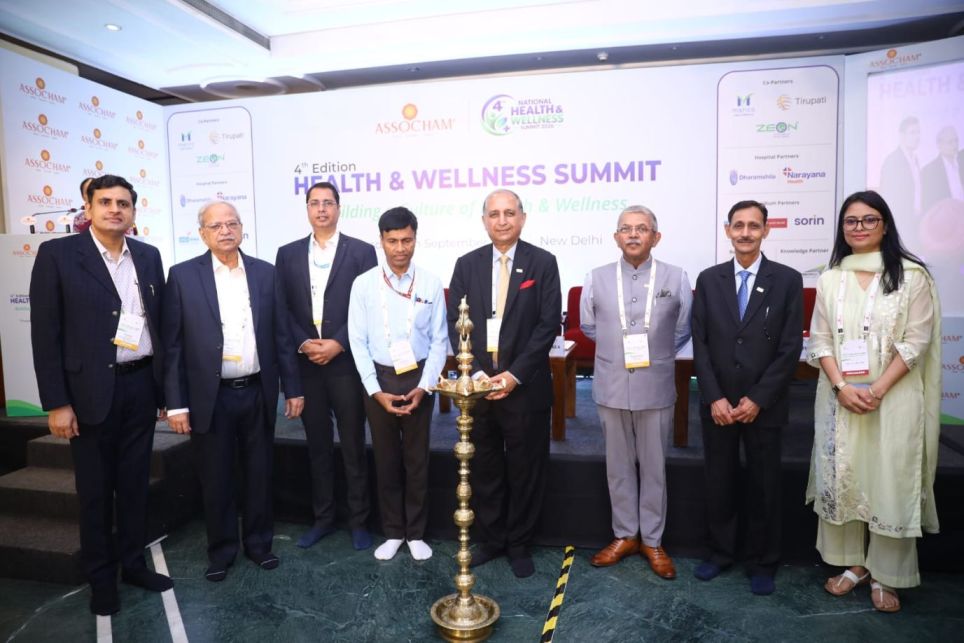
Released at the 4th ASSOCHAM Health & Wellness Summit 2026, the report highlights India’s shift from a treatment-first healthcare approach towards prevention, holistic wellbeing and a more integrated health and wellness ecosystem. It identifies wellness tourism and traditional medicine as important opportunities for India to leverage its Ayurveda and yoga heritage to meet growing global demand.
The report notes that the Ayurveda renaissance is being driven by the modernisation, standardisation and globalisation of traditional medicine, with Ayurvedic products emerging as the fastest-growing segment of the wellness stack covered in the report.
The Chief Guest, Dr. M. Srinivas, Hon’ble Member, NITI Aayog, highlighted the immense potential for India in wellness and medical value tourism and called for a transition from an illness-centric approach towards wellness. Speaking at the summit, he said, “There is an immense potential for the wellness, medical value tourism for the country. Half a billion, few billions is not a thing. I think we need to go beyond those countries which are very small countries and doing a good work and getting a lot of money.”
He added, “I think somewhere we need to transition from our illness-centric approach which we used to do in institutions and big hospitals to the wellness approach which is being heard today. That is something which is a commendable job and bringing all these people together is something which is very important.” Dr. Srinivas also urged greater investment in research and development, digital health and AI within the AYUSH ecosystem. He also proposed the concept of “Corporate Health Responsibility” alongside CSR and called for stronger industry participation in building a healthier India and contributing to the vision of Viksit Bharat 2047.
Highlighting the importance of evidence and trust in strengthening India’s healthcare and wellness proposition, Dr. Ramanand N. Shukla, CEO, National Accreditation Board for Testing and Calibration Laboratories (NABL), during his Keynote Address said, “The future of Indian healthcare as I see will not be defined only by how advanced our treatment is, it will be defined by how much the world trusts the evidence behind the treatment.”
He also added, “The world is trusting India and people are coming to us. However, when we look at the next stage of India's medical value travel story, it cannot be only about cost, infrastructure and medical expertise. It has to be about trust.” Dr. Shukla further underscored that as India builds its healthcare system into a global brand, diagnostic accreditation should be treated as a core pillar alongside hospital accreditation.
Speaking at the summit, Mr. Anil K. Agarwal, Past President, ASSOCHAM, said, “A healthy workforce is not merely a social responsibility, it is an investment in human capital, productivity and India's competitiveness.” He further emphasised the opportunity to position India as a global centre for healthcare delivery, prevention and wellness. He said, “India has enormous strength in healthcare. We are globally recognized as the pharmaceutical country of the world, manufacturer of the world, a supplier of pharmaceuticals, APIs to the world.”
Furthermore, Dr. B.K. Rao, Chairman, ASSOCHAM National Health & Wellness Council and Emeritus Consultant, Sir Ganga Ram Hospital, said, “India stands at a unique crossroads. We have the distinct advantage of blending the precision of modern medicine with the ancient wisdom of Ayurvedic and traditional systems, provided we remain evidence-based. And the evidence is what we should not shy away from.” He further called for a broader health and wellness ecosystem, involving healthcare providers, technology innovators, institutions and industry.
Addressing the gathering, Dr. R.K. Yadav, Co-Chairman, ASSOCHAM National Health & Wellness Council and Additional Professor – Nephrology, AIIMS Delhi, said, “True development is not only about economic prosperity, it is about creating a healthier, better educated, and more sustainable society. We therefore need to move from a culture of treating illness to preventing illness.” He also highlighted the role of government–industry collaboration and Corporate India in advancing healthcare, digital health, technology, accessibility and wellness.
The report underscores that India’s wellness opportunity extends beyond individual health choices to an integrated ecosystem involving healthcare providers, technology and digital platforms, nutrition and wellness companies, employers and institutions, government and policymakers, and insurers and payers. It also identifies preventive diagnostics, personalised wellness, corporate wellness, healthy ageing, women’s health, vernacular digital health, and wellness tourism and traditional medicine among the emerging opportunities.
A noteworthy highlight from the summit was the Health and Wellness Excellence Awards, which recognised outstanding contributions, achievements and innovations across the healthcare and wellness ecosystem.
The summit concluded with a vote of thanks by Mr. Saurabh Sanyal, Secretary General, ASSOCHAM, who expressed his gratitude to the distinguished speakers, panellists, industry leaders, healthcare professionals, policymakers and all participants for their valuable contributions and insights.
The summit reaffirmed ASSOCHAM’s continued commitment to fostering dialogue, collaboration and innovation in the healthcare and wellness ecosystem, while advancing a culture of prevention, evidence-based wellness and stronger integration across traditional and modern healthcare systems. The report’s 2030 vision envisages Ayurveda, yoga and modern medicine working as an integrated system, alongside a thriving and exportable wellness economy.